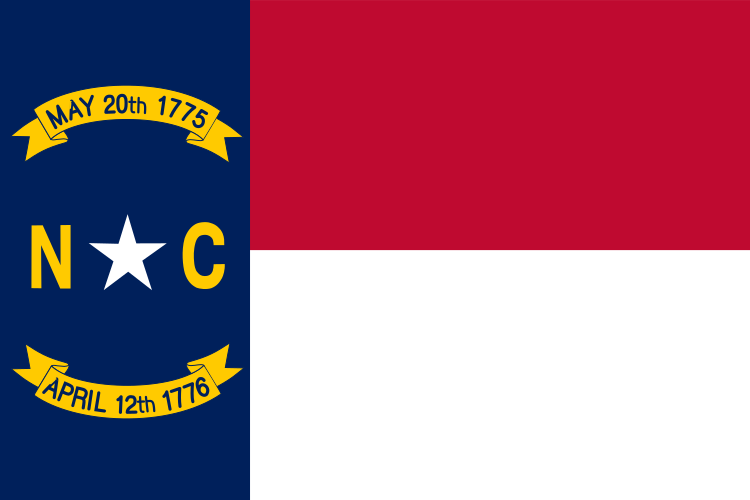
 North Carolina
Child care violations would carry misdemeanor or possible felony charges
Child care operators would face misdemeanor penalties for covered first willful violations, with possible felony charges for repeat offenses or substantial risk of harm to children.
What it does
Covered first willful child care violations would carry misdemeanor penalties. Prosecutors could seek more serious felony charges for repeat offenses or violations posing substantial risk of harm to a child.
For fiscal year 2025–2026, the state would set aside one-time funding of $50,000 for its health department and $25,000 for its court office to put the proposed penalties into practice.
Argument forProsecutors could match charges to the risk to children, an operator’s past violations, and steps taken to fix problems.
Argument againstLetting prosecutors choose felony charges could lead to different treatment of similar child care violations across districts.
More detail
Covered first offenses would carry Class A1 misdemeanor penalties, with possible Class I felony charges under the exceptions below. This covers operators who willfully violate G.S. 110-99(a), a child care law. It also covers willful violations of the child care law while caring for at least three children for more than four hours a day on two consecutive days. Prosecutors could seek felony charges for repeat offenses or any covered violation posing a substantial risk of harm to a child. They would have to consider the circumstances, children placed at risk, prior violations, and prompt action to fix problems. The state child care agency could also use civil or administrative enforcement alongside criminal prosecution or instead of it. The penalties would apply to violations occurring on or after the date the bill becomes law. Earlier offenses would remain under the prior prosecution and punishment rules.
The state would set aside $50,000 for the Department of Health and Human Services and $25,000 for the Administrative Office of the Courts. The health department’s Division of Child Development and Early Education would update enforcement guidance and training. The court office would prepare courts to apply the penalty rules. Both amounts would come from the General Fund as one-time funding. The health department would provide public guidance and coordinate with justice and court officials. The court office would update forms and systems and inform prosecutors and court staff. The bill would take effect when it becomes law.
Where do you stand?
Choose your position
Tell your reps
Take a position to see your representatives and ways to contact them.
Where it stands
- Introduced
- Passed Senate
- Passed House
- To Governor
- Became Law
Looking ahead
No hearings or votes scheduled.
History
- 2026
- May 6Withdrawn From ComLatest
- May 6Re-ref Com On Appropriations/Base BudgetMinor
- May 4Passed 1st ReadingMinor
- May 4Ref To Com On Rules and Operations of the SenateMinor
- Apr 30FiledIntroduced
Criminal JusticePublic SafetyTaxes & Budget