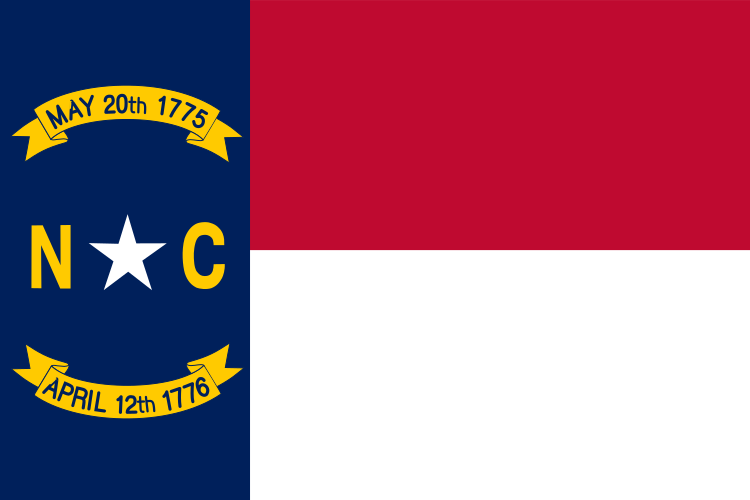
 North Carolina
Immigration officers would need court warrants in North Carolina
Federal immigration officers would need court-issued warrants in North Carolina, local cooperation would face limits, and four nonprofits would receive $4 million for immigration legal services.
What it does
Federal immigration enforcement would require court-issued warrants. State and local cooperation would face limits, including help with immigration arrests near schools, hospitals, and places of worship.
Four nonprofit groups would each receive $1 million from the state's General Fund for immigration legal services. They would report annually on their services and spending.
Officers would identify themselves and generally keep their faces visible, with safety and other exceptions. Federal officers would record active duty. Impersonating federal sworn officers would carry felony penalties.
The United States Department of Homeland Security would send the Governor weekly detention and deportation lists. For children under 18, it would immediately notify the Governor and their school.
Workplaces that train staff on constitutional protections against unreasonable searches would be protected from government or private retaliation based on that designation.
Argument forOfficer identification and body camera recordings could help people identify who stopped them and provide evidence when they report misconduct.
Argument againstBarring agreements that let local officers perform immigration duties could limit federal agencies' access to local help with immigration enforcement.
More detail
Federal immigration officers would need court-issued warrants based on probable cause. North Carolina would also repeal Session Law 2025-85. Assistance with immigration arrests would be restricted at public libraries and within 1,000 feet of schools, hospitals, and clearly marked places regularly used for worship. Court protections would cover parties, potential witnesses, and their family or household members going to, attending, or returning from proceedings. Documents issued by immigration agencies without a judge's approval would not justify detention, searches, or access to state or local records. State and local officers could not hold people solely on immigration agency warrants or detention requests, transfer custody without court-issued warrants, or allow immigration questioning in nonpublic jail areas without those warrants. Jails could not hold people past their otherwise lawful release solely on immigration detention requests. Communication about immigration status would be optional unless a federal court ordered it. State employees and local governments could not make federal agreements to perform immigration officer duties. Agreements conflicting with the protected-location rules would be void to that extent. Parts I and III would take effect July 1, 2026. Part I would apply to people detained or arrested by Immigration and Customs Enforcement or Customs and Border Protection on or after that date.
North Carolina would set aside $4 million from its General Fund for grants supporting immigration legal services. Recipients would be Carolina Migrant Network, Charlotte Center for Legal Advocacy, Legal Aid of North Carolina, and North Carolina Justice Center. Each group would receive $1 million. Legal Aid's grant would support its Immigration Pathways for Victims project. The Justice Center's grant would support its Immigrant & Refugee Rights project. The money could support immigration cases, asylum applications, legal education, and related staffing and service costs. Recipients would report annually on clients, cases, service locations, and spending. They would report case outcomes when confidentiality rules allow. The one-time funding would be for fiscal year 2026–2027 and remain available until spent. Part I would take effect July 1, 2026.
Officers would identify themselves and generally keep their faces visible. Federal officers would record active duty. Impersonating federal sworn officers would carry felony penalties. Face-covering and identification rules would cover state, local, and federal officers working in North Carolina. Uniforms would show accurate agency identification. Officers would give their name or badge number on request. Clear face shields, medical masks, hazardous-exposure protection, transportation helmets, and religious coverings would fall outside the face-covering ban. Exceptions would cover active undercover work, tactical safety, identity protection during prosecution, and situations governed by workplace safety or accommodation laws. Federal officers would wear working body cameras, turn them on during active duty, and retain footage. They could face lawsuits for injuries caused by violations only to the extent federal law allows. The felony level for impersonating federal sworn officers would depend on the offense. Officer requirements would take effect July 1, 2026. Impersonation penalties would apply to offenses committed on or after December 1, 2026.
The United States Department of Homeland Security would report detentions and deportations to the Governor. The weekly lists would cover all people detained within and deported from North Carolina. Weekly lists would include the charges against each person. When a child under 18 was detained in or deported from North Carolina, the department would immediately notify the Governor and the child's school. These duties would take effect July 1, 2026, and apply to detentions and deportations on or after that date.
Governments and private entities would be barred from retaliating against workplaces because of their designation as workplaces that train staff on constitutional search protections. Public and private workplaces would qualify by training staff on Fourth Amendment protections against unreasonable searches and seizures. The protection would apply to retaliation based on the workplace's designation, rather than every dispute involving that workplace. This protection would take effect July 1, 2026.
Where do you stand?
Choose your position
Tell your reps
Take a position to see your representatives and ways to contact them.
Where it stands
- Introduced
- Passed Senate
- Passed House
- To Governor
- Became Law
Looking ahead
No hearings or votes scheduled.
History
- 2026
- May 5Withdrawn From ComLatest
- May 5Re-ref Com On Appropriations/Base BudgetMinor
- May 4Passed 1st ReadingMinor
- May 4Ref To Com On Rules and Operations of the SenateMinor
- Apr 30FiledIntroduced
ImmigrationCriminal Justice