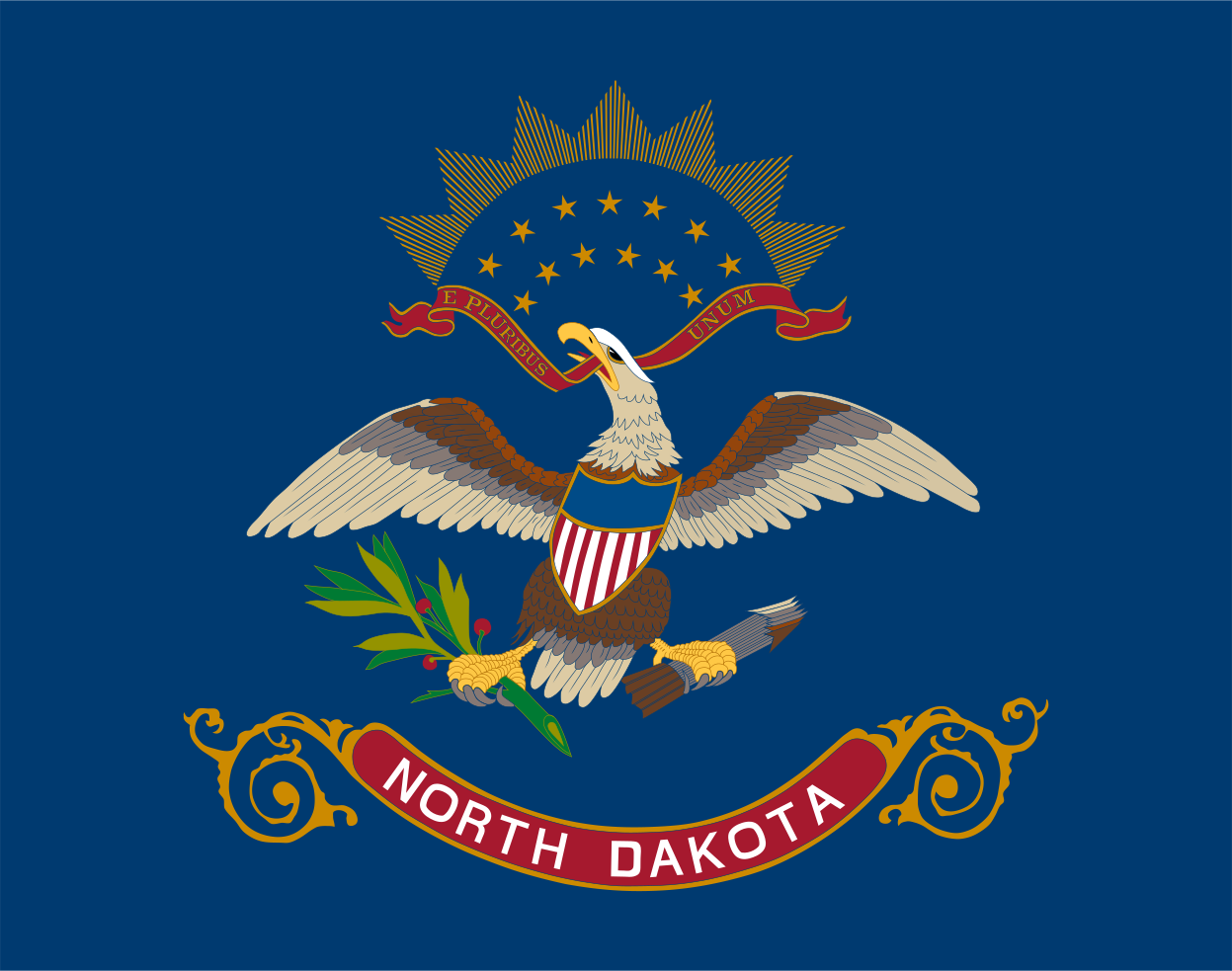
 North Dakota
 ties local government aid to immigration policy compliance
North Dakota law requires state aid to be withheld from local governments that the attorney general finds have prohibited immigration policies.
What it does
Local governments found to have prohibited immigration policies have state aid withheld. The money goes into a special fund that can pay them after compliance or pay other compliant local governments.
State agencies, local governments, and state-supervised colleges cannot adopt policies that restrict specified immigration cooperation, grant local lawful presence or status, or block local officers from asking people in custody about immigration status.
Individuals can complain to the attorney general about a prohibited policy. A local government receiving a violation finding has 30 days to appeal or show that the policy has ended.
Argument forHolding back state aid could encourage local governments to follow the law's rules for cooperating with federal immigration officials.
Argument againstWithholding state aid could leave local governments with less money for services while they challenge a finding or change their policies.
More detail
The attorney general must direct the state treasurer to withhold a local government's share of the state aid distribution fund. The funding penalty applies to local governments. Withholding follows an attorney general finding that the local government has a prohibited immigration policy. The law directs payment of withheld money after compliance, but it also allows fund money to go to other compliant local governments using existing distribution methods. Money in the fund is available to the state treasurer on an ongoing basis without a separate spending approval each time. The attorney general must order withholding within 30 days after the local government receives the finding and must order it stopped when sufficient evidence shows compliance.
Covered public bodies and their employees and agents may not adopt or carry out prohibited immigration policies, formally or informally. The restrictions cover the state, local governments, colleges supervised by the state board of higher education, and their employees and agents. Policies cannot restrict people from communicating or cooperating with federal officials to verify or report immigration status, or violate the cited federal immigration-information law. Policies cannot restrict or place conditions on state or local government cooperation with United States Immigration and Customs Enforcement to hold or transfer people unlawfully present in the country. Policies cannot grant lawful presence or status locally to people unlawfully present in the country, or prevent local law enforcement officers from asking people in custody about citizenship or immigration status. A policy, order, or ordinance that violates these rules has no legal effect.
The attorney general may investigate an individual's complaint and must issue a written finding when a local government violates the law. Individuals may submit complaints. The required findings and response process apply to local governments. The written finding must identify the prohibited policy and explain the facts supporting the finding. A local government may appeal to district court or show the attorney general that the policy is no longer in effect. If the evidence is sufficient, the attorney general must issue a second written finding confirming that the prohibited policy is no longer in effect. The 30-day response period starts when the local government receives the attorney general's written finding.
Where do you stand?
Choose your position
Tell your reps
Take a position to see your representatives and ways to contact them.
Where it stands
- Introduced
- Passed House
- Passed Senate
- To Governor
- Became Law
Looking ahead
No hearings or votes scheduled.
History
- 2025
- Apr 21Filed with Secretary Of State 04/16Latest
- Apr 18Signed by Governor Kelly Armstrong 04/16Became Law
- Apr 15Sent to GovernorTo Governor
- Apr 15Signed by Speaker
- Apr 14Signed by President
- Apr 9Returned to House
- Vote recorded Motion for Final Passage on HB 1303. Result: pass.Upper
- Apr 9Second reading, passed, yeas 41 nays 5Passed Senate
- Apr 4Reported back, do pass, place on calendar 4 2 0Minor
- Mar 28Committee Hearing 09:00
- Mar 7Introduced, first reading, referred State and Local Government CommitteeMinor
- Feb 25Received from House
- Feb 24Second reading, passed, yeas 82 nays 11Passed House
- Vote recorded Motion for Final Passage on HB 1303. Result: pass.Lower
- Feb 24Amendment adopted, placed on calendar
- Feb 21Reported back amended, do pass, amendment placed on calendar 6 1 6Minor
- Feb 6Committee Hearing 09:30
- Jan 13Introduced, first reading, referred Political Subdivisions CommitteeIntroduced
ImmigrationTaxes & Budget