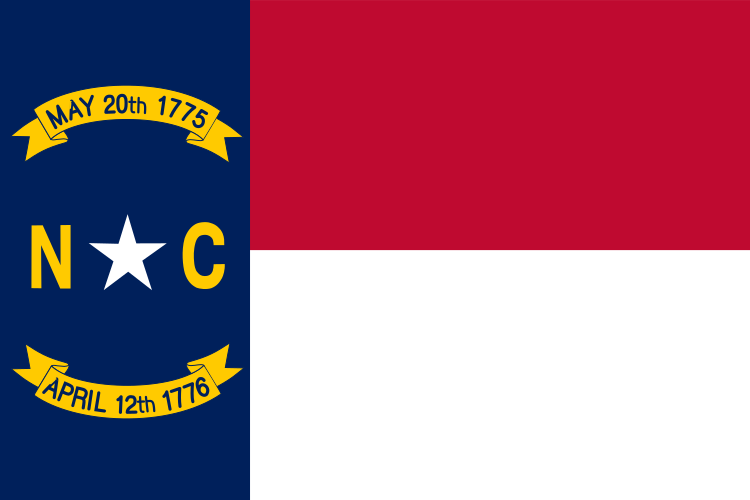
 North Carolina
 schools could offer career learning and mastery-based courses
Public schools could offer career learning for credit, excuse students for private religious instruction, and help selected schools shift to learning based on mastery.
What it does
Public schools could work with partners to offer flexible technology or health science courses that include work experience. Students who complete them could earn up to four elective credits.
Schools would excuse students to attend private religious instruction during the school day, with family consent and attendance records. Students must make up missed work, and excused time is capped at four hours a week.
Ten schools would receive $330,000 each to plan and begin competency-based learning, where students progress by showing what they know. Planning starts in 2026–2027, with school programs starting the following year.
Public schools could use state funds to offer Khanmigo, an AI tool for teachers and students in grades 6 through 12. Participation is optional, and schools must review its use before renewing each year.
Argument forStudents could earn elective credit through flexible, hands-on career learning and connect high school courses with community college credentials.
Argument againstSchools may struggle to staff learning labs or build these programs, since facilitator funding depends on money being made available.
More detail
Public school units may work with eligible partners to offer high-tech or health science learning programs. Public school students may choose modular learning units in technology, engineering, health science, or related fields; programs must include work-based learning. The school unit must sign an agreement with its partner. A facilitator must verify successful completion before the school awards credit. Students may earn up to four credits, with no credit for learning units already completed for credit. State funding for facilitator positions depends on funds being made available. The provisions apply beginning with the 2026–2027 school year.
Public school units must adopt policies requiring principals to excuse students for private religious instruction during the school day. The policy covers students at public school units, including charter schools, who attend instruction offered by a private group during the school day. A parent or guardian must sign a consent form and provide proof of attendance for each day missed. Families must arrange transportation, and students must make up missed schoolwork. Schools may not use state or local funds to help students attend, except for small administrative costs. Instruction may not take place on school property unless a neutral facility-use policy allows it. Schools must excuse at least one hour, but principals may not approve more than four hours in one calendar week. The section applies beginning with the 2026–2027 school year.
The Department of Public Instruction must select 10 schools for grants to plan and start competency-based education programs. Public school units may apply for a grant for a school that will use student mastery, rather than time in class, to guide progress. Schools must apply, and the Department must prioritize applicants showing a strong commitment and readiness to make the shift. Each school receives a $330,000 grant. It must use $95,000 each school year for training; the rest supports the transition. Applications and planning take place in the 2026–2027 school year. Participating schools begin implementation in 2027–2028, and grant funds remain available through the 2029–2030 fiscal year.
Public school units that choose to participate may use state funds to contract with Khan Academy for its Khanmigo service. The program is for students in grades 6 through 12 and supports teachers with lesson planning and students with understanding lessons. Participating units must spend these funds on Khanmigo, related training, and an approved class rostering system. Each contract lasts one year. Units must evaluate use of the service before renewing for another school year and report their evaluation to the Department. Recurring funding begins in fiscal year 2026–2027.
Where do you stand?
Choose your position
Tell your reps
Take a position to see your representatives and ways to contact them.
Where it stands
- Introduced
- Passed Senate
- Passed House
- To Governor
- Became Law
Looking ahead
No hearings or votes scheduled.
History
- 2026
- Jun 3Reptd Fav Com SubstituteLatest
- Jun 3Com Substitute Adopted
- Jun 3Re-ref Com On Appropriations/Base BudgetMinor
- May 18Withdrawn From Com
- May 18Re-ref to Education/Higher Education. If fav, re-ref to Appropriations/Base BudgetMinor
- May 4Passed 1st ReadingMinor
- May 4Ref To Com On Rules and Operations of the SenateMinor
- Apr 30FiledIntroduced
Education